In stock › Guides › Hoop Metallurgy & Profiles Guide: COB, COS, Die-Cast, Flanged & Wood Hoops
Hoop Metallurgy & Profiles Guide: COB, COS, Die-Cast, Flanged & Wood Hoops
Reference guide · counts measured from photographed specimens · updated 2026-11-08
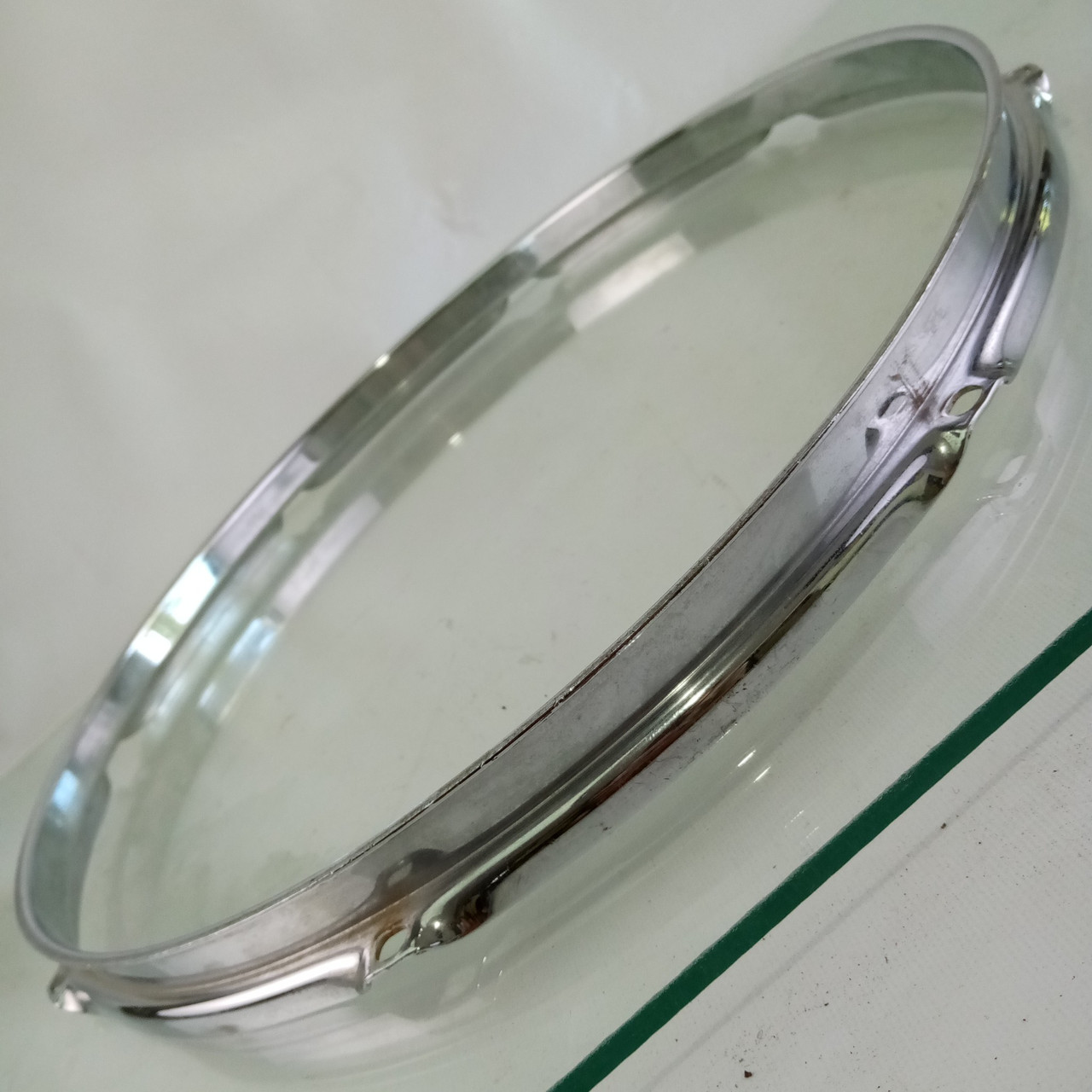
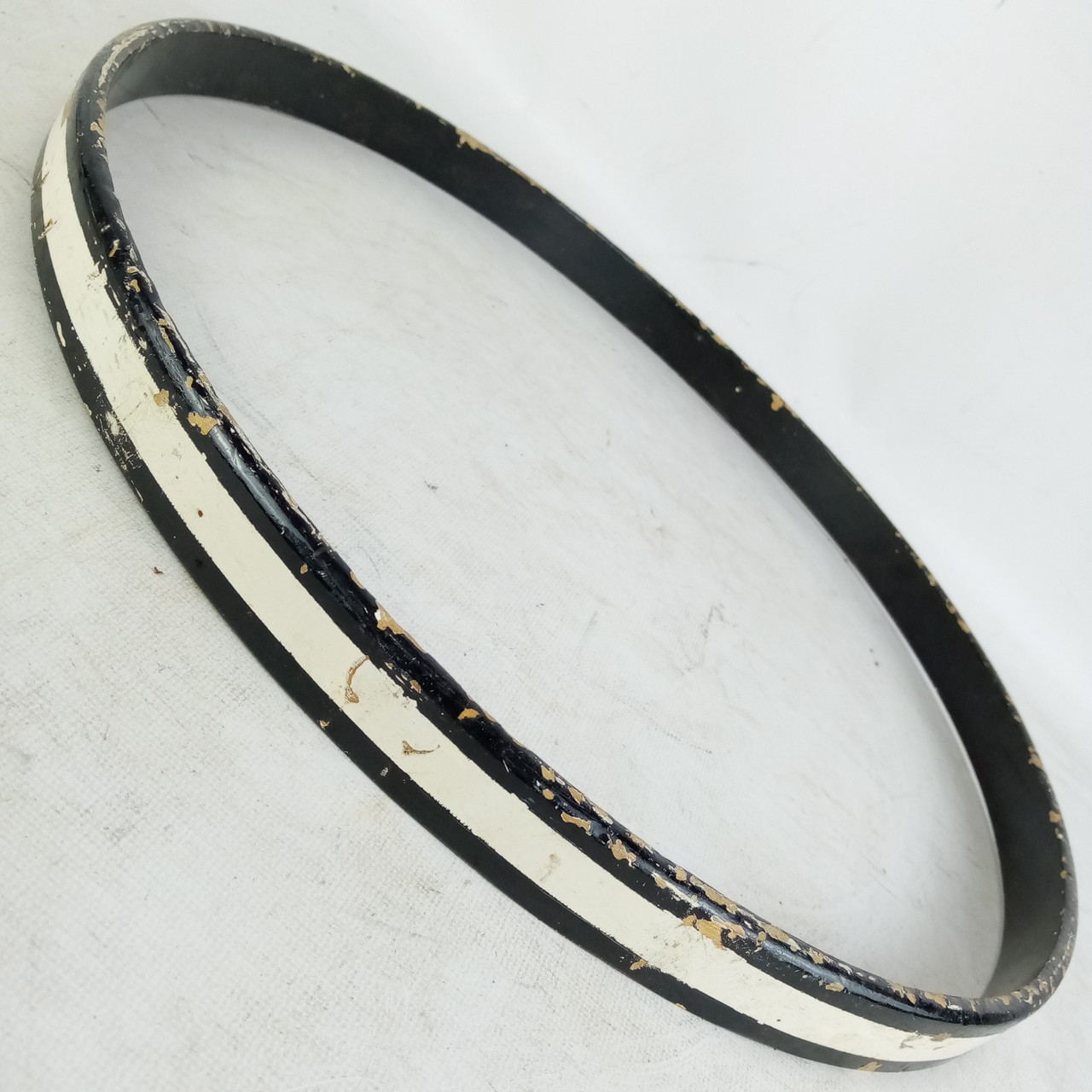
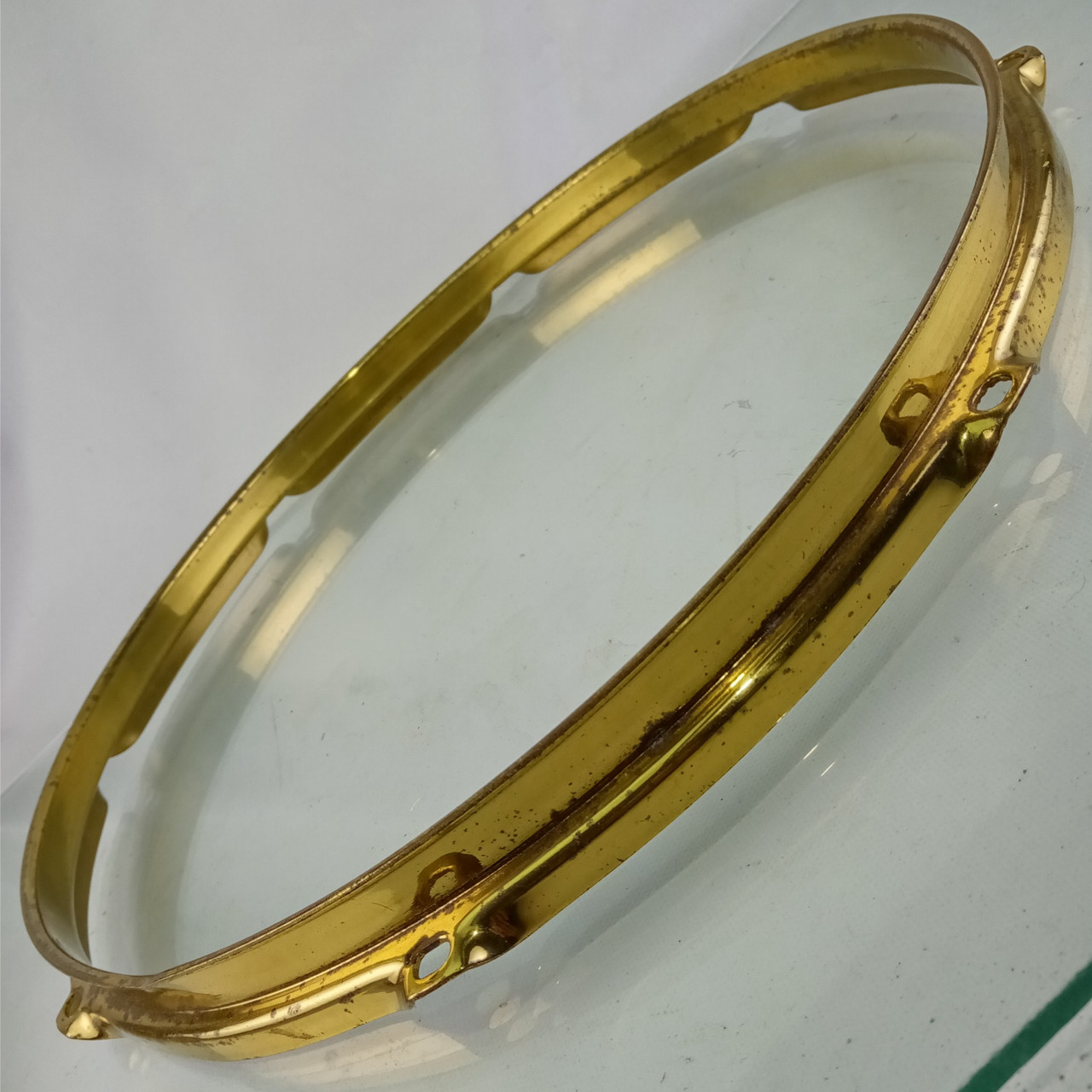
Hoop metal decides corrosion and value while profile voices the drum: chrome over brass (COB, nickel-over-brass/NOB on pre-60s drums) resists pitting and earns the collector premium; chrome over steel (COS) voices the bright workhorse attack; die-cast hoops play dry and centered with strong cross-stick; triple-flange projects bright; double-flange splits the vintage difference; single-flange with clips gives the open resonant vintage tone; straight hoops serve Latin and concert applications; wood and maple bass-drum hoops in matching wrap complete the kit visually.
Sizing is diameter plus lug count, exactly: a 14-inch 10-lug hoop never fits an 8-lug drum. Nickel belongs with nickel-era drums and chrome with later shells — mixing them is the classic visual tell of a married-together drum. Check every die-cast hoop for cracks at the lug ears before paying up; a cracked ear is a priced replacement, not a dealbreaker on an otherwise original drum.
The tables below are measured from our own hoop pool — metallurgy and profile mentions with specimen counts on every figure, plus diameters, lug counts and era bands — so you can see exactly what the evidence rests on. A COB triple-flange counts in both its metal and its profile rows; mentions, never an exclusive partition. Match diameter and lug count together, then confirm metal and profile against the badge era.
Hoop specimens by era
COB/NOB is the pre-60s collector mark; COS and triple-flange voice the 60s attack.
| Era | In stock | Archived |
|---|---|---|
| Pre-1950 | 46 in stock | 278 archived |
| 1950s | 21 in stock | 128 archived |
| 1960s | 38 in stock | 326 archived |
| 1970s | 14 in stock | 236 archived |
| 1980s | 5 in stock | 97 archived |
| 1990s+ | 0 in stock | 6 archived |
| Undated | 186 in stock | 536 archived |
Metallurgy & profiles in stock now
A COB triple-flange counts in both its metal and its profile rows; mentions, never an exclusive partition.
| Metal / profile | In stock | Archived |
|---|---|---|
| Chrome over brass (COB/NOB) | 156 in stock | 220 archived |
| Chrome over steel (COS) | 25 in stock | 94 archived |
| Die-cast | 43 in stock | 161 archived |
| Triple-flange | 39 in stock | 231 archived |
| Double-flange | 36 in stock | 36 archived |
| Single-flange | 29 in stock | 109 archived |
| Straight | 6 in stock | 21 archived |
| Wood/maple | 70 in stock | 328 archived |
Diameters in stock now
Match diameter and lug count exactly — a 14-inch 10-lug hoop never fits an 8-lug drum.
| Diameter | Availability |
|---|---|
| 14" | 68 in stock |
| 15" | 52 in stock |
| 13" | 31 in stock |
| 16" | 25 in stock |
| 12" | 15 in stock |
| 18" | 6 in stock |
| 22" | 4 in stock |
| 24" | 4 in stock |
Lug counts in stock now
| Lugs | Availability |
|---|---|
| 8 | 66 in stock |
| 6 | 18 in stock |
| 10 | 10 in stock |
| 4 | 5 in stock |
| 5 | 2 in stock |
Hole spacings in this guide's specimens
Measured center-to-center on hoops and rims. Match your shell drilling exactly; same-brand hardware from different eras drills differently.
| Spacing | Availability |
|---|---|
| 2 7/16" | 1 in stock |
Thread pitches in this guide's specimens
12-24 fits most vintage American drums; 10-24 fits older and single-tension designs. A 12-24 rod starts in a 10-24 lug then seizes — verify before forcing.
| Pitch (TPI) | Availability |
|---|---|
| 10-24 | 18 in stock |
| 12-24 | 2 in stock |
Dual-verified reference (this guide's pool)
Rows whose every routed Size, Hole, and TPI field two independent worker legs judged correct — the same dual-verified pool behind the site-wide fitment master. Figures below are restricted to hoops and rims members.
| Spacing | Dual-verified specimens |
|---|---|
| 1 1/2" | 2 dual-verified |
| 2 7/16" | 2 dual-verified |
| 5 3/4" | 2 dual-verified |
| 1 1/4" | 1 dual-verified |
| 1 7/8" | 1 dual-verified |
| 12" | 1 dual-verified |
| 14" | 1 dual-verified |
| 3 3/4" | 1 dual-verified |
| Pitch (TPI) | Dual-verified specimens |
|---|---|
| 10-24 | 19 dual-verified |
| 12-24 | 2 dual-verified |
Metal & profile calls at a glance
| Metal / profile | Voice | Era cue |
|---|---|---|
| Chrome over brass | Complex, pitting-resistant, premium | Pre-60s NOB; Radio King correct |
| Chrome over steel | Bright workhorse attack | 60s steel shells |
| Die-cast | Dry, centered, strong cross-stick | Check ears for cracks |
| Triple-flange | Bright, projecting | Post-60s standard |
| Double-flange | Vintage middle voice | Broadkaster-era toms |
| Single-flange | Open, resonant | Clips; early vintage |
| Straight | Focused Latin/concert edge | Bongo and concert rims |
| Wood/maple | Warm, completes the kit look | Bass drums, marching |
Deep dives: rims and counterhoops · hoops & rims profile guide · Gretsch die-cast guide · dictionary: die-cast.
Matching pieces in stock now
In stock as of 2026-11-08. One-of-a-kind stock sells and the list below is a build-time snapshot — if a piece is gone, its page says so and the archive keeps its record.
In stock now

Frequently asked questions
COB or COS — which should my drum wear?
Badge first: chrome over brass (often stamped NOB) with pre-60s drums and Radio King restorations, chrome over steel with 60s workhorses. Plating should agree with the badge — mixed eras mark a married or modified drum, priced as a player.
How do I size a replacement hoop?
Diameter plus lug count, exactly: measure the shell across the bearing edge and count the lugs — a 14-inch 10-lug hoop never fits an 8-lug drum. Both numbers must agree.
Die-cast, flanged or wood — which profile?
For the focused attack and strong cross-stick, die-cast; for bright projection, triple-flange; for open vintage resonance, single-flange with clips; for the completed kit look on kicks, matching wood. Match the profile the drum was built for.
Are cracked die-cast hoops usable?
A hairline at one ear can still tune, but a spread crack at a lug seat will not hold tension honestly. Price a cracked hoop as a replacement and keep looking for an original-correct spare.