In stock › Guides › Vintage Zildjian Cymbal Stamp Dating Guide: Trans-Stamp to Hollow Logo
Vintage Zildjian Cymbal Stamp Dating Guide: Trans-Stamp to Hollow Logo
Reference guide · counts measured from photographed specimens · updated 2026-11-08
The stamp dates the cymbal. Trans-stamp marks the 40s with thin hand-hammered B20 and Ottoman character; small stamp marks the early 50s and large stamp the late 50s; the short stamp marks the 60s; the hollow logo marks the 70s. Stamp first, weight second — that order dates every vintage Zildjian, and legible stamps carry the premium over cleaned examples with erased detail.
Weight in grams sets the voice at a fixed diameter: thinner weights ride dark and complex for jazz crash-ride versatility, heavier weights ping defined for rock. Hand-hammering irregularities in vintage B20 give the trashy complexity modern machine lathing chases, and lathing character plus surviving ink confirm what the stamp says. Compare gram weights against cymbals you know rather than buying a diameter alone.
Check bells for cracks and edges for repairs — both are priced in, and edge cracks can travel. Keyholing, flea bites, and brilliant-versus-traditional finish all move price. The tables below are measured from our own catalog rows — era bands and diameters with specimen counts on every figure — so you can see exactly what the evidence rests on.
Zildjian specimens by era
Trans-stamp is the 40s mark, small and large stamps the 50s, short stamp the 60s, hollow logo the 70s.
| Era | In stock | Archived |
|---|---|---|
| Pre-1950 | 1 in stock | 39 archived |
| 1950s | 0 in stock | 54 archived |
| 1960s | 0 in stock | 65 archived |
| 1970s | 0 in stock | 20 archived |
| 1980s | 1 in stock | 7 archived |
| 1990s+ | 0 in stock | 1 archived |
| Undated | 2 in stock | 56 archived |
Diameters in stock now
Match diameter and weight together — weight in grams sets the voice at a fixed diameter.
| Diameter | Availability |
|---|---|
| 14" | 2 in stock |
| 12" | 1 in stock |
| 20" | 1 in stock |
Stamp progression at a glance
| Stamp | Era cue | Voice cue |
|---|---|---|
| Trans-stamp | 40s, thin hand-hammered B20 | Dark, complex jazz weights |
| Small stamp | Early 50s | Thin to medium, crash-ride versatility |
| Large stamp | Late 50s | Medium, defined stick with wash |
| Short stamp | 60s | Weigh by grams — jazz to rock crossover |
| Hollow logo | 70s | Heavier rock pings, brilliant options |
Start here: all Zildjian pieces · vintage cymbals · 1950s drums and parts · 1960s drums and parts.
Matching pieces in stock now
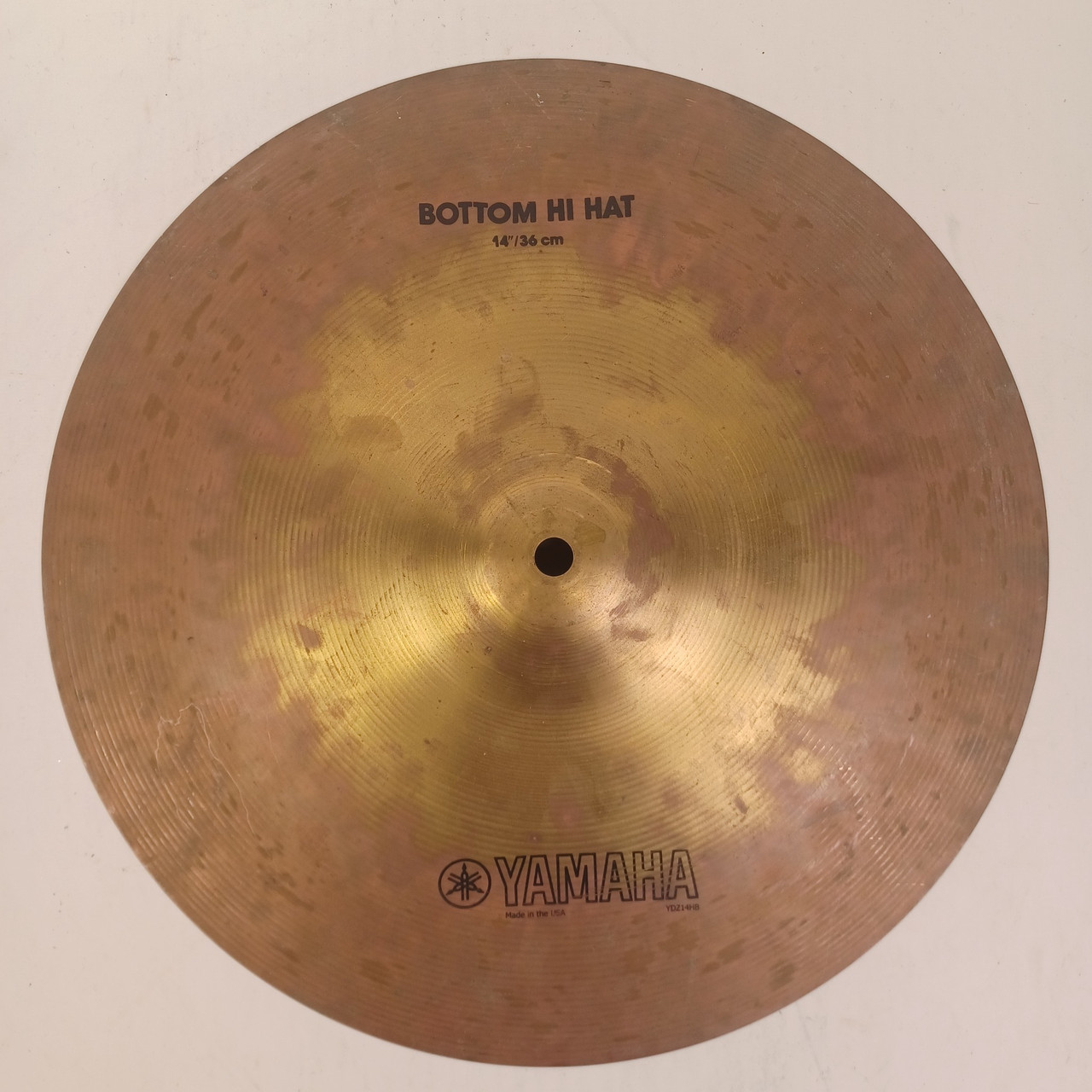
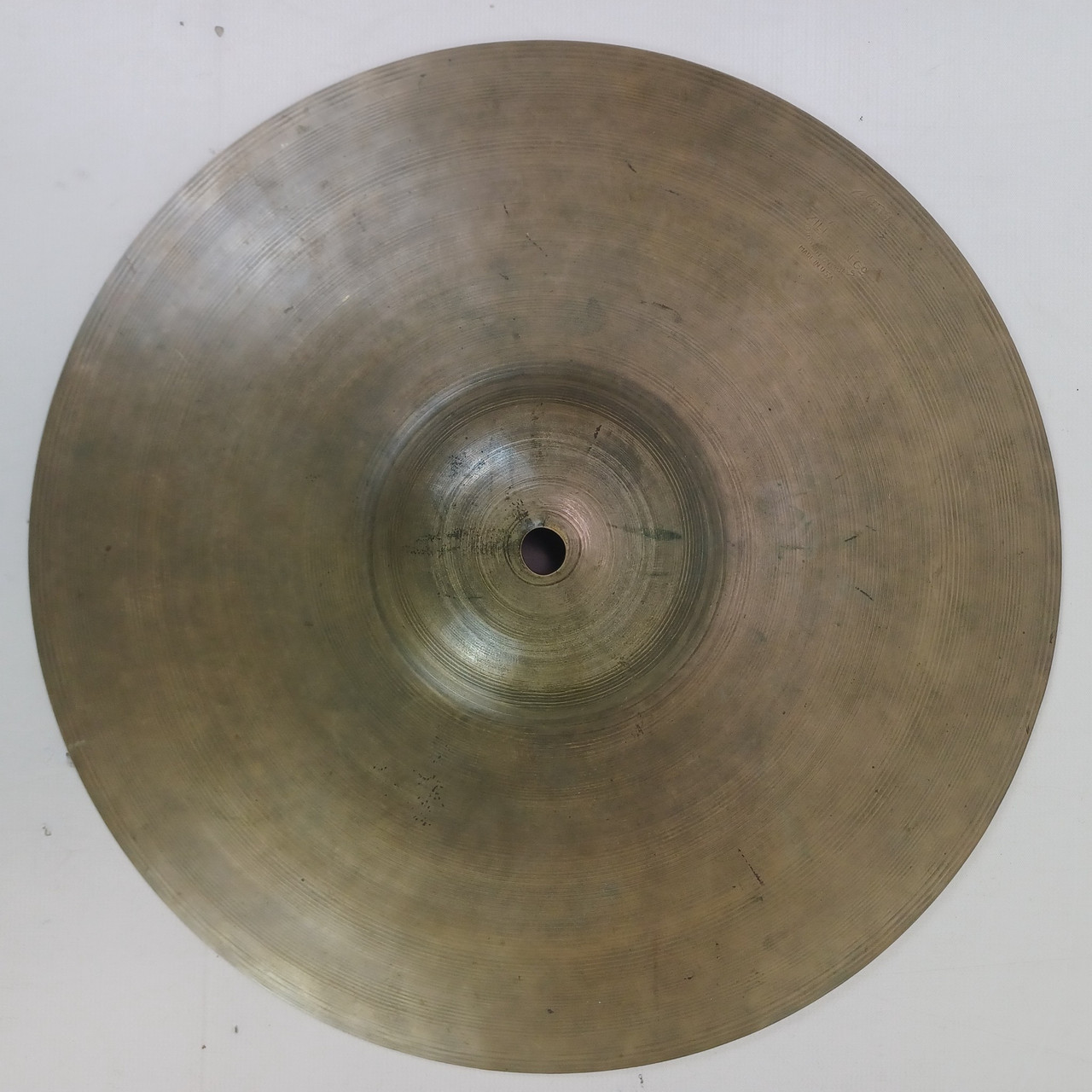
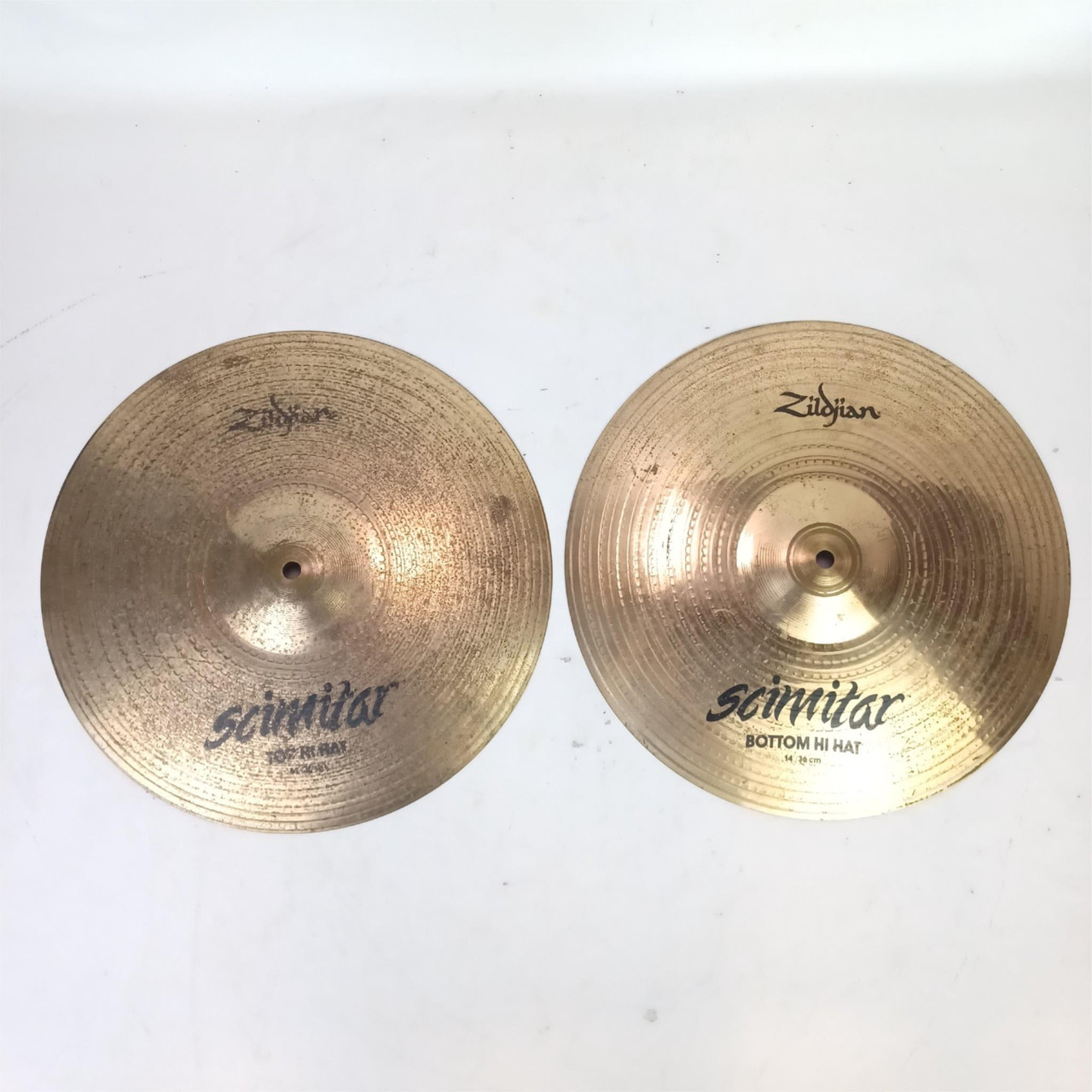
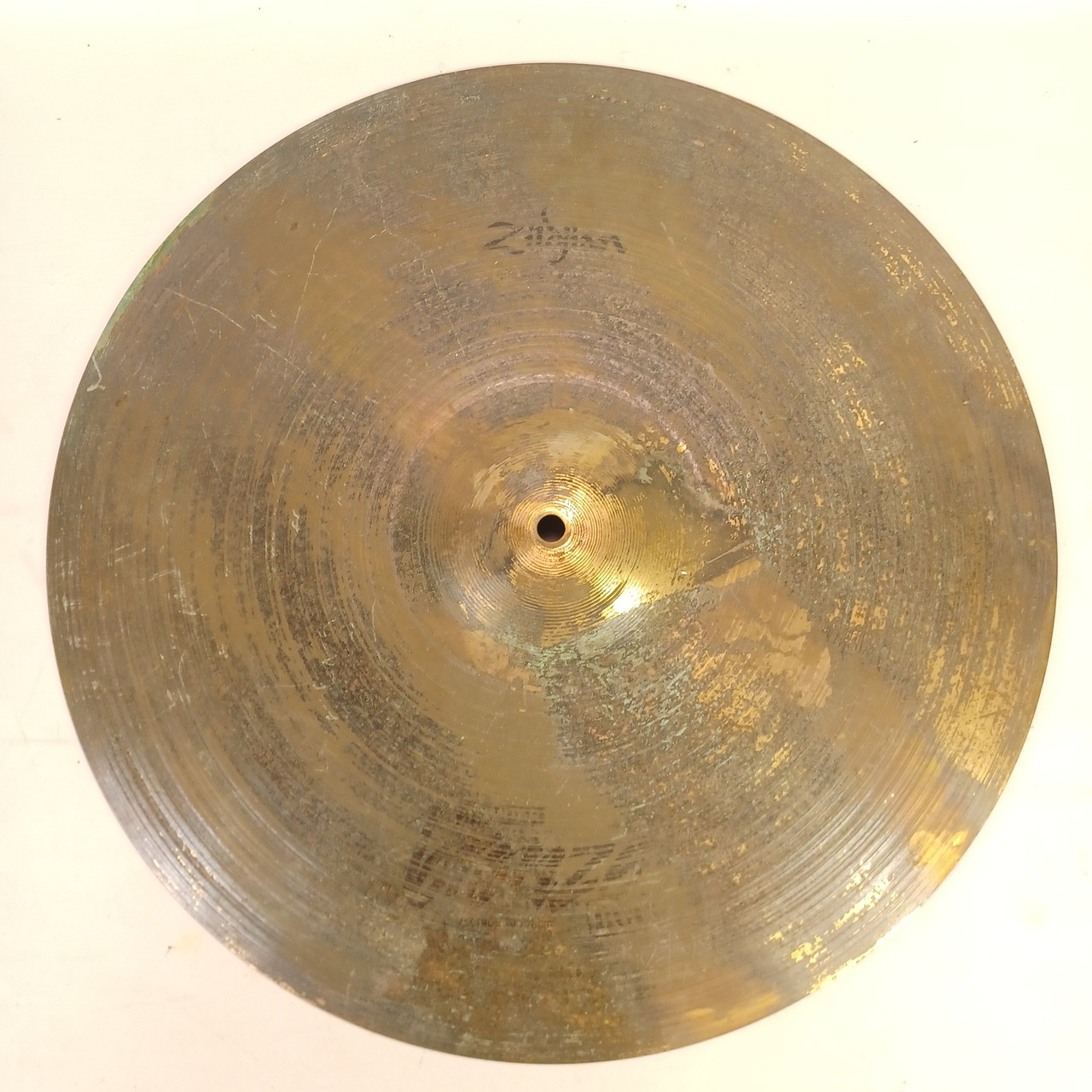
In stock as of 2026-11-08. One-of-a-kind stock sells and the list below is a build-time snapshot — if a piece is gone, its page says so and the archive keeps its record.
In stock now
Frequently asked questions
How do I date a Zildjian by its stamp?
Stamp progression first: trans-stamp for the 40s, small then large stamps for the 50s, short stamp for the 60s, hollow logo for the 70s. Weight, lathing character, and surviving ink should all agree with the stamp — mixed signals mean a cleaned or misread cymbal, priced accordingly.
What weight should I buy?
For dark jazz complexity, thinner weights at your diameter; for defined rock ping, heavier weights. The diameter tables below carry the weights we recorded where the listing states them — compare grams against cymbals you know.
Are cracks always a dealbreaker?
No, but they are always priced in: edge cracks can travel, bell-hole cracks affect mounting, and repairs change the voice. Every crack we find is photographed and disclosed — buy the discount, not the surprise.
What is keyholing, and does cleaning hurt value?
Keyholing is enlargement of the mounting hole from stand wear — common, honest, and usually sonically neutral. Cleaning hurts only when it erases stamp detail: untouched examples with legible stamps trade above cleaned cymbals at the same weight.